
São Miguel is one of the best places in the Azores to experience the volcanic origins of the islands first-hand. Across the island, geothermal activity heats natural springs, thermal pools and even a section of the Atlantic Ocean.
The best-known São Miguel hot springs are found around Furnas and the Fogo volcanic complex, with each place offering a different experience. At Parque Terra Nostra, you can bathe in iron-rich thermal water surrounded by a historic botanical garden. Poça da Dona Beija has several smaller pools in Furnas, while Caldeira Velha combines warm water with dense vegetation on the slopes of the Fogo Volcano. On the west coast, Ponta da Ferraria offers something completely different: seawater naturally heated by volcanic springs.
This guide explains the main hot springs in São Miguel, how they differ and what you should know before choosing which ones to visit.
São Miguel is a volcanic island, and geothermal activity remains visible in several areas today. Furnas is one of the clearest examples, where visitors can see fumaroles, steaming ground and hot springs throughout the valley.
Underground water is heated by geothermal energy before returning towards the surface. Depending on the location, this creates hot springs, thermal pools and other geothermal features.
The result is a collection of bathing experiences that are closely connected to the geology of the island.
Located in Furnas, Parque Terra Nostra is home to one of the most recognisable thermal pools in the Azores.
The large central pool contains naturally heated, iron-rich water with its characteristic orange-brown colour. According to Parque Terra Nostra, its thermal waters range from approximately 38°C to 42°C and contain minerals including iron, calcium, magnesium, potassium and sodium.
Entry to the thermal pool is included with admission to the botanical garden, so this is a good choice if you want to combine bathing with time exploring the park.
Good to know: wear a dark swimsuit. The iron-rich water can stain light fabrics and may temporarily affect the colour of hair, nails or nail polish.

Parque Terra Nostra – Parque Terra Nostra
Poça da Dona Beija is also located in Furnas, but the experience is quite different from Terra Nostra.
Instead of one large central thermal pool, the site has several smaller bathing areas surrounded by vegetation and stone walls. It is a good option for visitors primarily interested in relaxing in thermal water rather than combining the experience with a large botanical garden.
Access is managed through timed reservations, so booking in advance is recommended, particularly during busy travel periods.
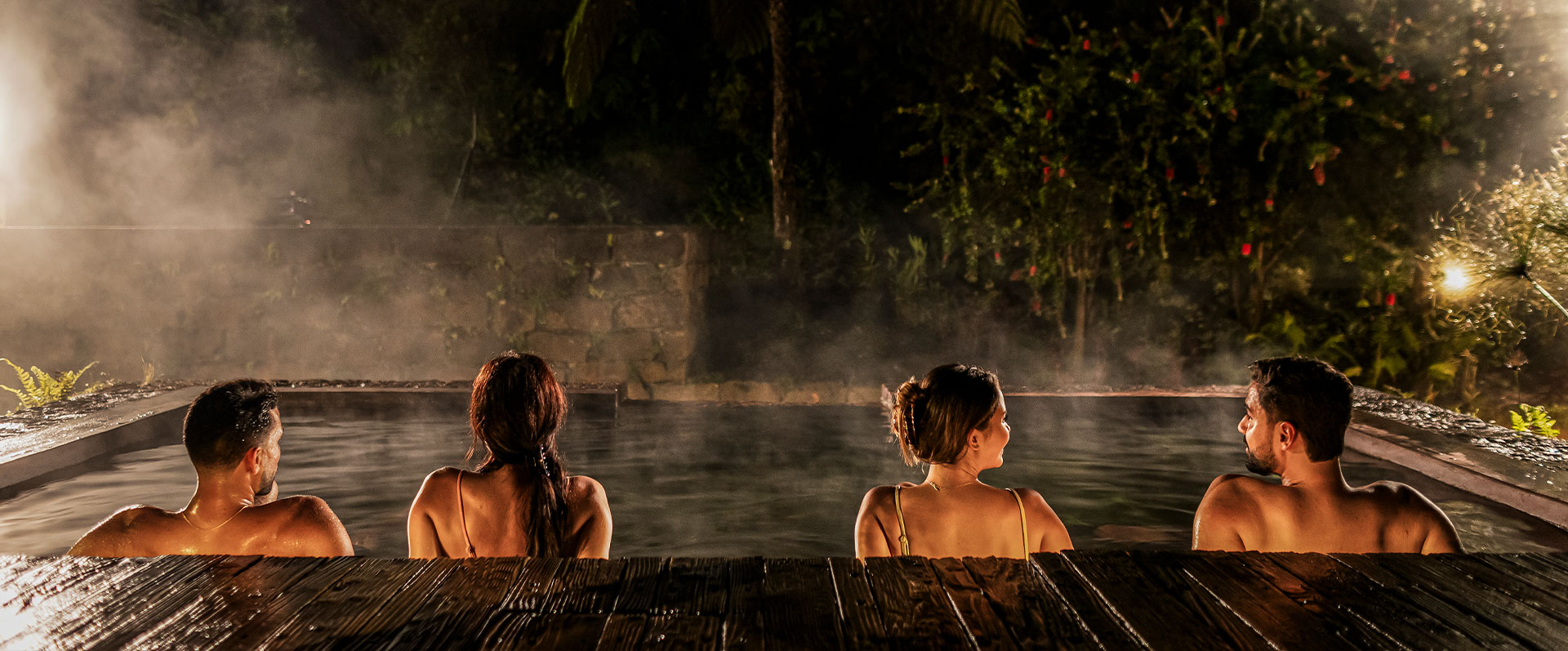
Poça da Dona Beija – Poça da Dona Beija
Caldeira Velha lies on the slopes of the Fogo Volcano, between Ribeira Grande and Lagoa do Fogo.
The setting is one of its main attractions. Thermal pools are surrounded by dense vegetation, large ferns and volcanic rock, giving the area a very different character from the thermal sites in Furnas.
The protected Natural Monument also has an environmental interpretation centre explaining the volcanic origin of the Azores, the formation of the Fogo Volcano and the geothermal features of the area.
If you are planning to visit Lagoa do Fogo and Ribeira Grande on the same day, Caldeira Velha fits naturally into the route.

Ponta da Ferraria offers the most unusual thermal bathing experience on São Miguel.
Located on the western coast of the island, Ferraria is a natural ocean pool where geothermal springs heat the seawater. Unlike the other locations in this guide, you are bathing directly in the Atlantic.
Timing is essential. The thermal effect is strongest around low tide, when the hot spring water mixes with a smaller volume of cooler ocean water. Official Azores trail information notes that water temperatures can rise above 30°C during low tide.
Sea conditions also matter. Avoid entering when waves or currents make the pool unsafe.

Ponta da Ferraria – Ilha de São Miguel © Bucket List Portugal
The four main locations offer noticeably different experiences, so the best choice depends on what you want from the visit.
You do not necessarily need to visit all four. For most travellers, choosing two different thermal experiences during a stay on São Miguel provides plenty of variety.
This is one of the most useful comparisons for visitors staying in Furnas because both are located in the same area.
Terra Nostra makes sense when you want to dedicate part of the visit to the botanical garden as well as the thermal water. Its large iron-rich pool is also visually distinctive and has become one of the best-known images of Furnas.
Poça da Dona Beija is more focused on bathing. Its smaller pools create a different experience and allow you to move between several bathing areas.
If you have enough time in Furnas, visiting both is possible. If you only want one thermal experience, choose according to whether the botanical garden is an important part of your day.
Thermal bathing is available throughout the year, and there is no single season when you need to visit.
Cool or rainy days can actually be particularly comfortable for bathing in warm geothermal water. During busy travel periods, however, popular locations can fill up, making advance planning useful.
Ferraria is the exception when it comes to timing. Here, the tide is more important than the season because the temperature of the natural pool depends on the interaction between geothermal water and the Atlantic.
For Terra Nostra in particular, use an older or dark-coloured swimsuit because of the iron content in the water.
Yes. São Miguel’s thermal pools operate beyond the summer season, making them particularly useful for travellers visiting during the cooler months.
Rain does not necessarily spoil the experience either. Bathing in warm geothermal water while the air is cool can be very pleasant, provided the site remains open and conditions are safe.
You can easily include a thermal experience within a wider day of exploring the island rather than dedicating an entire day exclusively to hot springs.
In Furnas, combine Terra Nostra or Poça da Dona Beija with the village, geothermal areas and Lagoa das Furnas. Caldeira Velha works well on a route through central São Miguel that includes Lagoa do Fogo and Ribeira Grande.
Ponta da Ferraria fits naturally into a western São Miguel itinerary and can be combined with Sete Cidades or Mosteiros, depending on your route and the tide.
Before visiting, check the official website of each attraction for current opening hours, reservation requirements and temporary restrictions.
Hot springs are one of the easiest ways to experience the volcanic landscape of São Miguel, but they also fit naturally into a wider island itinerary.
Through @AZORES, you can explore activities and tours around São Miguel, including experiences in Furnas, Sete Cidades, Lagoa do Fogo and other parts of the island.